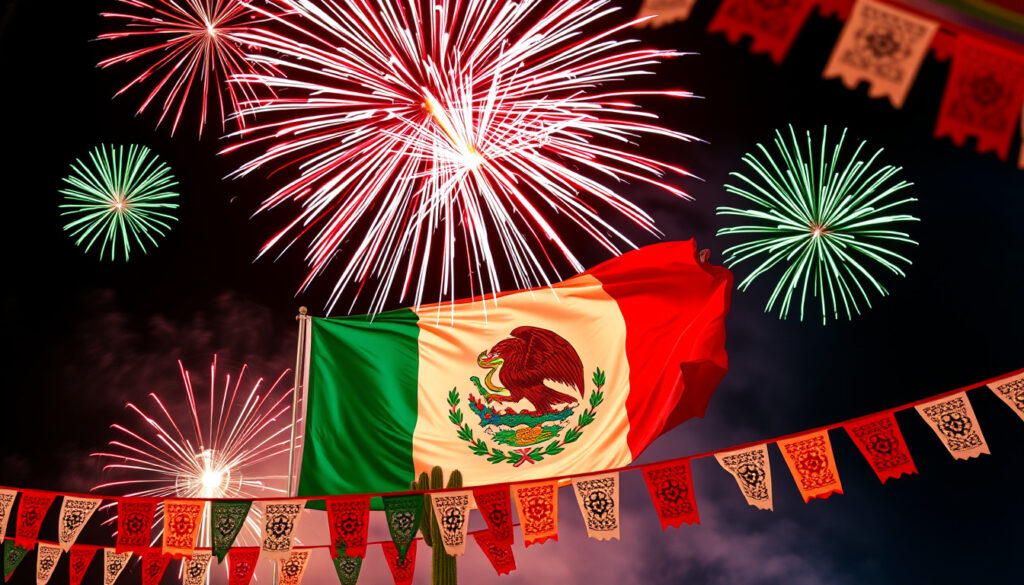
When Is Mexican Independence Day – Date, History & Celebrations
Mexican Independence Day falls on September 16 each year, marking the anniversary of the Grito de Dolores—the call to arms issued by priest Miguel Hidalgo y Costilla in 1810 that ignited the war for independence from Spanish colonial rule. The celebration extends beyond a single day, with the main festivities occurring on the evening of September 15 at approximately 11 p.m., while September 16 remains a mandatory federal holiday throughout Mexico.
For many observers outside Mexico, the holiday remains shrouded in confusion, frequently mistaken for Cinco de Mayo. Yet the two observances commemorate entirely different historical events. Understanding the precise date, its significance, and the traditions surrounding Mexican Independence Day provides insight into one of the nation’s most treasured national celebrations.
When is Mexican Independence Day?
September 16 stands as the official date of Mexican Independence Day, a federal holiday that has been observed annually since the early nineteenth century. The date commemorates the events of September 16, 1810, when Miguel Hidalgo y Costilla, a Roman Catholic priest from the town of Dolores (now Dolores Hidalgo) in the state of Guanajuato, summoned his parishioners to rise against Spanish colonial authority.
While September 16 serves as the official federal holiday, the ceremonial centerpiece known as El Grito occurs on the evening of September 15, typically around 11 p.m. This timing predates modern lighting, originally chosen to make the bell ringing and shouting more visible and audible to gathered crowds before electric illumination became commonplace.
September 16 annually
Grito de Dolores, 1810
El Grito de Independencia
Parades, fireworks, traditional food
Essential Facts About the Date
- Fixed annual date: September 16 remains constant regardless of the day of the week
- El Grito timing: The presidential ceremony begins at 11 p.m. on September 15
- Federal holiday status: September 16 guarantees a nationwide day off from work and school
- Extended festivities: Celebrations often begin days in advance, particularly in major cities
- Global observance: Mexican communities abroad typically hold their own commemorations
- 214th anniversary: The 2024 celebration marked 214 years since Hidalgo’s original call
| Fact | Details |
|---|---|
| Official Date | September 16 |
| El Grito Ceremony | September 15, 11 p.m. |
| Commemorates | Father Hidalgo’s call to arms (1810) |
| Status | Federal holiday in Mexico |
| Global Reach | Celebrated by Mexican diaspora worldwide |
| Holiday Classification | Mandatory day off, alongside May 1 Labor Day |
What is the History Behind Mexican Independence Day?
The origins of Mexican Independence Day trace to the early morning hours of September 16, 1810, when Miguel Hidalgo y Costilla, the parish priest of Dolores, rang his church bell and delivered a fiery address that would change the course of Mexican history. Standing before his congregation during mass, Hidalgo called for the end of Spanish colonial rule and the establishment of an independent Mexican nation.
The Grito de Dolores marked the beginning of the Mexican War of Independence, a conflict that would rage for eleven years before concluding in 1821 with the signing of the Treaty of Córdoba and the recognition of Mexican sovereignty. The original bell, known as the Campana de Dolores, remains preserved in the National Palace in Mexico City, where it continues to feature prominently in annual commemorations.
Early Commemorations (1810–1825)
Following Hidalgo’s initial call, the tradition of publicly commemorating the independence movement took several years to formalize. The first recorded public celebration occurred in 1812 in the town of Huichapan, organized by independence leaders Ignacio López Rayón and Andrés Quintana Roo. These early observances featured cannon fire, bell ringing, and choir music held at El Chapitel house, establishing elements that would become enduring components of the celebration.
By 1813, José María Morelos, another key figure in the independence movement, had formalized the celebratory traditions. However, the most significant early milestone came in 1825, when President Guadalupe Victoria delivered the first presidential Grito from the National Palace balcony in Mexico City’s Zócalo. That year’s celebration took place amid a measles epidemic and included a parade, fireworks, music, and ceremonies specifically dedicated to freeing enslaved people and war orphans.
The tradition of holding El Grito at 11 p.m. on September 15 predates President Porfirio Díaz, who served from 1876 to 1911. Historical evidence suggests the timing evolved from practical challenges of replicating Hidalgo’s early morning call before electric lighting existed, rather than from any deliberate scheduling adjustment for Díaz’s birthday as sometimes claimed.
Evolution of Modern Celebrations
Today, Mexican Independence Day symbolizes national sovereignty and unity, with leaders across the country—from the president in Mexico City to local mayors in municipalities throughout the nation—reenacting Hidalgo’s historic cry. Each ceremony typically includes naming the independence heroes, including Hidalgo and Morelos, and concludes with the threefold shouted exclamation of ¡Viva México!
The celebration extends far beyond official ceremonies. Families gather for festive meals featuring traditional dishes, public spaces transform with decorations in the national colors of green, white, and red, and communities stage parades, concerts, and fireworks displays that rival those held for Christmas or New Year’s in terms of scale and enthusiasm.
How is Mexican Independence Day Celebrated?
The nationwide Fiestas Patrias represent one of Mexico’s most significant cultural observances, drawing participation from virtually every segment of society. Celebrations begin on the evening of September 15 and continue through September 16, creating an extended period of festivity that showcases Mexican pride, history, and communal spirit.
The El Grito Ceremony
At the heart of the celebration stands the El Grito de Independencia ceremony, staged at the National Palace in Mexico City’s historic Zócalo. The Mexican president appears on the palace balcony—standing precisely where independence leaders have gathered for over a century—and rings the Campana de Dolores. The president then recites portions of Hidalgo’s original proclamation, naming the heroes of independence and calling for the nation’s continued unity.
The ceremony reaches its climax as the president leads the assembled crowd in shouting ¡Viva México! three times. The response echoes throughout the plaza and across the nation via broadcast media, creating a synchronized moment of national unity. In 2024, President Claudia Sheinbaum became the first woman to deliver El Grito from the National Palace balcony, marking a historic milestone in the ceremony’s long tradition.
Regional and Community Celebrations
The presidential ceremony in the capital sets the tone, but celebrations unfold simultaneously in every Mexican state and municipality. Local officials in towns and cities across the country echo the Grito from their own municipal balconies or local plazas (zócalos), adapting the ceremony to reflect regional histories and heroes of the independence movement.
Fireworks displays illuminate skies in the national colors of green, white, and red throughout the night. Parades feature military units, school groups, and community organizations marching through main streets, often accompanied by traditional music and dancing. Family gatherings bring relatives together for festive meals featuring classic Mexican dishes prepared especially for the occasion.
Mexican Independence Day ranks among the most important holidays in the Mexican calendar, comparable to Christmas or New Year’s in terms of decorations, festivities, and family gatherings. Those planning travel to Mexico during this period should anticipate widespread closures and heightened demand for accommodations and transportation.
Federal Holiday Implications
September 16 maintains mandatory federal holiday status in Mexico, ensuring a nationwide day off for workers and students. This governmental recognition preserves the holiday’s significance alongside May 1 Labor Day, underscoring the date’s importance in Mexican national identity. Banks, government offices, and most businesses close for the day, while essential services maintain minimal staffing.
The holiday’s status as a fixed-date celebration means it always falls on September 16 regardless of weekday scheduling. This permanence allows families to plan gatherings well in advance and ensures the celebration’s consistent place in the national calendar, unlike moveable holidays that shift based on calendar calculations.
Is Cinco de Mayo the Same as Mexican Independence Day?
A common misconception conflates Cinco de Mayo with Mexican Independence Day, but the two observances commemorate entirely different historical events separated by more than fifty years and thousands of miles of context. Understanding this distinction clarifies why September 16 holds the significance that Cinco de Mayo does not.
Mexican Independence Day (September 16)
September 16 marks the anniversary of Miguel Hidalgo’s Grito de Dolores in 1810, the event that sparked the Mexican War of Independence against Spanish colonial rule. This date initiates the decade-long struggle that ultimately resulted in Mexico’s independence as a sovereign nation in 1821. The celebration represents the birth of modern Mexico as an independent country.
The commemoration carries profound significance within Mexico, where it serves as the primary national independence celebration. Families, communities, and government institutions all participate in observances that reinforce national identity and historical memory. For Mexicans, September 16 represents foundational history comparable to July 4 in the United States.
Cinco de Mayo (May 5)
Cinco de Mayo commemorates the Mexican army’s victory over French forces at the Battle of Puebla on May 5, 1862—fifty-two years after Mexico gained independence. This military triumph against a better-equipped French invasion force became a symbol of Mexican resistance, though the battle itself did not decisively alter the war’s outcome.
The holiday holds relatively limited significance within Mexico itself, with the most notable celebrations occurring in Puebla, where the battle took place. Paradoxically, Cinco de Mayo has achieved greater popularity in the United States, where it became commercialized as a celebration of Mexican culture and heritage—often without awareness of the historical event it actually commemorates.
| Comparison | Mexican Independence Day | Cinco de Mayo |
|---|---|---|
| Date | September 16 | May 5 |
| Commemorates | Start of independence war (1810) | Battle of Puebla victory (1862) |
| Significance in Mexico | Major national holiday | Minor observance |
| Celebrations | Extensive nationwide | Limited, primarily in Puebla |
| Key Event | Grito de Dolores | Battle of Puebla |
The confusion between these two dates likely stems from their shared Mexican heritage and the general promotion of Mexican culture during spring months. However, for those seeking to understand Mexican history and national identity, the distinction between the birth of a nation and a single military victory remains essential.
A Timeline of Mexican Independence
The journey from Spanish colonial rule to independent nationhood unfolded over more than a decade, with key milestones that established the traditions now commemorated annually. The following timeline traces the evolution from Hidalgo’s initial call to modern celebrations.
- September 16, 1810: Miguel Hidalgo rings his church bell and delivers the Grito de Dolores, calling for an end to Spanish colonial rule and the beginning of the independence movement.
- 1812: The first public commemoration of the independence movement occurs in Huichapan, organized by Ignacio López Rayón and Andrés Quintana Roo, featuring cannon fire, bells, and choir music.
- 1813: José María Morelos formalizes independence celebrations and continues advancing the independence cause throughout Mexican territories.
- September 27, 1821: Mexico achieves formal independence from Spain after eleven years of conflict, recognized through the Treaty of Córdoba.
- September 16, 1825: President Guadalupe Victoria delivers the first presidential Grito from the National Palace balcony in Mexico City’s Zócalo, establishing a tradition that continues today.
- September 15-16, 2024: President Claudia Sheinbaum becomes the first woman to lead El Grito from the National Palace, marking the 214th anniversary of Hidalgo’s original call.
What is Established Versus Uncertain About Mexican Independence Day?
While the core facts surrounding Mexican Independence Day rest on solid historical documentation, certain details remain subjects of scholarly inquiry or have been subject to popular myths that persist despite historical evidence. Distinguishing established facts from areas of uncertainty provides clarity for those seeking accurate understanding.
| Established Information | Information That Remains Unclear |
|---|---|
| September 16 serves as the official holiday date annually | Precise wording of Hidalgo’s original Grito remains debated among historians |
| The ceremony occurs at 11 p.m. on September 15 | Exact attendance figures at historical ceremonies before modern record-keeping |
| The Campana de Dolores bell is housed in the National Palace | Whether the current bell is the original or a replacement |
| El Grito tradition predates Porfirio Díaz | Complete text of the presidential Grito recitation varies by year and speaker |
| Mexico achieved independence in 1821 | Specific regional variations in early commemoration practices |
Why Understanding the Historical Context Matters
Mexican Independence Day represents far more than a festive occasion—it embodies the foundational narrative of Mexican national identity. The holiday connects contemporary Mexicans to the revolutionary moment when their ancestors first demanded sovereignty and self-determination. This historical consciousness shapes everything from educational curricula to political rhetoric, reinforcing shared values of liberty and national pride.
The distinction between initiating an independence war and achieving formal independence carries particular significance. September 16 commemorates the moment of courage and conviction when Hidalgo chose to challenge colonial authority, knowing the personal and collective risks involved. The eleven years of conflict that followed tested that initial conviction repeatedly, with multiple leaders rising and falling before the goal of independence was finally achieved.
For the Mexican diaspora communities celebrating abroad, the holiday provides an opportunity to maintain connections to heritage and homeland. What Are the 7 Deadly Sins in the Bible – List, Verses, Origins examining cultural preservation reveals how national holidays function as anchoring traditions for communities separated by geography. Similar patterns appear across immigrant communities worldwide, where commemorative dates serve as focal points for collective identity maintenance.
Official Sources and References
Several authoritative sources document the history and celebration of Mexican Independence Day. Mexican government resources provide official information regarding federal holiday status and national ceremony protocols. Academic institutions including the California State University system maintain detailed records of the commemoration’s historical development and contemporary practice.
The celebration of independence continues to evolve while maintaining deep connections to its historical roots. Each generation interprets the significance of September 16 through the lens of contemporary challenges and aspirations, ensuring the holiday’s relevance remains fresh while honoring the sacrifices of those who came before.
Encyclopedic sources such as Wikipedia provide comprehensive chronological accounts of independence events and their commemoration, while specialized cultural publications offer insights into regional variations and contemporary celebration practices. Travel and experience guides document the practical aspects of participating in or observing celebrations, providing valuable context for those visiting Mexico during the holiday period.
Summary
Mexican Independence Day falls on September 16, commemorating Miguel Hidalgo’s Grito de Dolores issued on that date in 1810. The main ceremony, El Grito, occurs on September 15 evening at 11 p.m., when the president rings the historic Campana de Dolores from the National Palace balcony in Mexico City’s Zócalo. This federal holiday represents one of Mexico’s most significant national celebrations, featuring fireworks, parades, family gatherings, and nationwide expressions of patriotic pride.
Unlike Cinco de Mayo, which celebrates an 1862 military victory at Puebla, Mexican Independence Day marks the beginning of the nation’s journey toward sovereignty from Spanish colonial rule. The celebration continues traditions established in the early nineteenth century while evolving to reflect contemporary Mexican society. .INX – S&P 500 Index History Components Performance exploring historical commemoration patterns reveals how nations preserve foundational narratives through annual ritual observance.
Frequently Asked Questions
When did Mexico gain independence from Spain?
Mexico achieved independence from Spain on September 27, 1821, following the Treaty of Córdoba, which ended eleven years of conflict that began with Hidalgo’s Grito de Dolores in 1810.
Is Mexican Independence Day a federal holiday in Mexico?
Yes, September 16 is a mandatory federal holiday in Mexico, guaranteeing a nationwide day off from work and school, similar to May 1 Labor Day in significance.
What time does El Grito occur on Mexican Independence Day?
El Grito de Independencia traditionally occurs at approximately 11 p.m. on September 15, the evening before the official federal holiday.
What is the difference between Cinco de Mayo and Mexican Independence Day?
Mexican Independence Day (September 16) commemorates the 1810 start of the independence war, while Cinco de Mayo (May 5) celebrates an 1862 military victory at Puebla against French forces.
Who first led the Grito ceremony?
President Guadalupe Victoria delivered the first presidential Grito on September 16, 1825, from the National Palace balcony in Mexico City’s Zócalo.
Where is the Campana de Dolores?
The Campana de Dolores, the bell rung by Miguel Hidalgo in 1810, is preserved in the National Palace in Mexico City and used in annual El Grito ceremonies.
Who was the first woman to lead El Grito?
President Claudia Sheinbaum became the first woman to deliver El Grito from the National Palace balcony in 2024, marking a historic milestone in the ceremony’s tradition.
What does ¡Viva México! mean during the celebration?
The threefold exclamation of ¡Viva México! (Long live Mexico!) concludes each El Grito ceremony, representing national unity and patriotic pride.
More related posts
 Property for Sale Near Me: Find Houses in Ireland Guide
 College Football Playoff Bracket 2026: Schedule and Predictions
 FC Barcelona vs Real Madrid Lineups – Official 2026 Super Cup XIs
 23 Signs You Grew Up With Ehlers-Danlos Syndrome (EDS)
 Seattle Sounders vs PSG: 0-2 Match Recap & Highlights
 2025 St. Paul Cyber Attack: Timeline, Cost, and Lessons Learned
 Max Keeble’s Big Move: Plot, Cast, Box Office & Streaming
 Candyman (2021) Review: Is It a Good Horror Movie