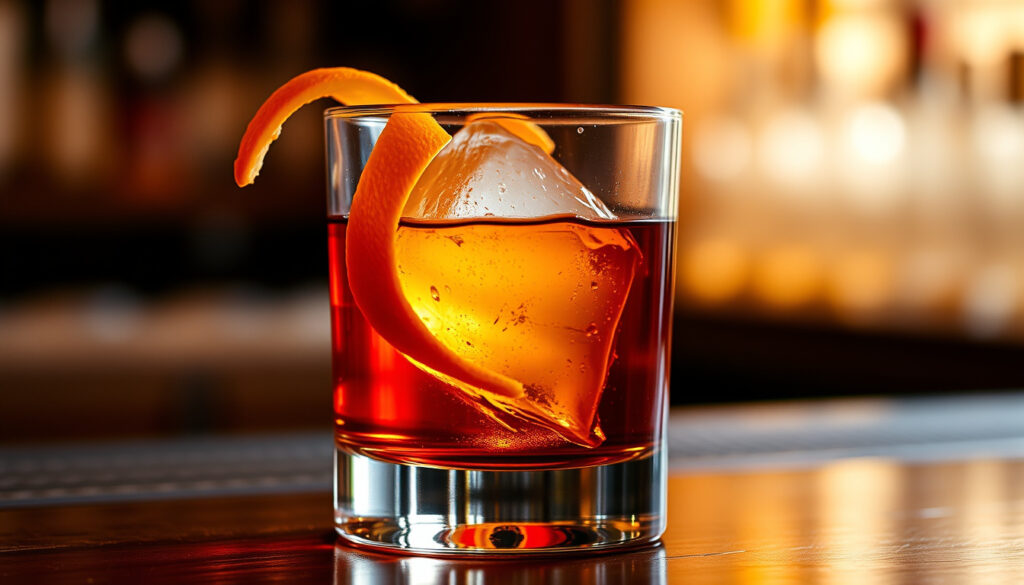
How to Make an Old Fashioned: Classic Cocktail Recipe
There’s a reason the Old Fashioned has survived for nearly two centuries: it’s deceptively simple, but the small choices — sugar cube vs. syrup, bourbon vs. rye — change everything. Whether you’re a whiskey lover or just building your first home bar, this guide walks through the classic method and the common pitfalls that separate a great Old Fashioned from a mediocre one, covering why each ingredient matters.
Origin: Early 1800s · ABV: ~30% (60 proof) · Key Ingredients: Whiskey, Sugar, Bitters, Water · Garnish: Orange peel, optional cherry · Dilution: ~20% from melting ice
Quick snapshot
- The Old Fashioned is built from whiskey, sugar, bitters, ice, and a citrus garnish (The Mixer (cocktail history resource))
- Classic garnish is an orange peel (Inspired Taste (recipe site))
- Stirring 18–25 seconds chills and dilutes properly (Tom Macy / Social Hour (professional bartender))
- Whether to use a sugar cube or simple syrup is still debated (A Bar Above (cocktail resource))
- The exact origin of the name “Old Fashioned” is disputed (Ballantine’s (whisky brand history))
- Recipe first recorded in the early 1800s, “whisky, sugar, bitters, ice” (Wikipedia (historical summary))
- Modern stripped-down version (no fruit muddle) popularized in the early 2000s (VinePair (cocktail culture coverage))
- Expect more variations with flavored bitters (walnut, orange) and syrups (Meat Church (recipe blog))
- Home bartenders increasingly use large ice cubes for controlled dilution (Difford’s Guide (bartender reference))
Five key facts about the Old Fashioned, one pattern: the original template hasn’t changed much, but modern tools and preferences offer new ways to adjust texture and flavor.
| Attribute | Detail |
|---|---|
| Origin | Early 1800s, likely Kentucky/Wisconsin debate |
| ABV | Approximately 30% (60 proof) with standard ingredients |
| Calories | ~150-200 calories per serving |
| Bitters | Angostura bitters are the most common (Ballantine’s (whisky brand history)) |
| Garnish | Orange peel, with optional cherry |
What is the correct way to make an Old Fashioned?
Step-by-step instructions
- Place 1 sugar cube (or 1 tsp sugar) in an Old Fashioned glass. Add 2–3 dashes Angostura bitters and 1 tsp water.
- Muddle gently until the sugar dissolves completely (Delish (popular recipe site)).
- Add one large ice cube or a large sphere of ice. Pour 2 oz bourbon or rye whiskey over the ice.
- Stir with a bar spoon for 18–25 seconds until well chilled and slightly diluted.
- Express an orange peel over the glass to release oils, then run the peel around the rim and drop it in. Optionally garnish with a cocktail cherry (Anders Erickson (cocktail educator)).
Tools needed
- Old Fashioned glass (rocks glass) or a double old-fashioned glass
- Bar spoon (long-handled)
- Jigger (1 oz / 2 oz measure)
- Large ice cube mold or a single large cube from a block
- Citrus peeler or knife for the orange peel
Garnish and presentation
The orange peel isn’t just for looks — its oils add aromatics that lift the whiskey. PBS Food (public broadcasting culinary series) warns that muddling the peel can release bitter compounds from the white pith, so express the oils over the rim and rest the peel gently in the glass.
A sugar cube takes longer to dissolve but gives a slightly grainier texture that purists argue melds better with the whiskey. Simple syrup (0.5 oz) speeds preparation but adds a silkier mouthfeel and slightly more dilution upfront.
What are the three ingredients in an Old Fashioned?
Whiskey: Bourbon or Rye
Bourbon brings a sweeter, vanilla-forward profile, while rye adds spice and dryness. The Mixer (cocktail history resource) notes that modern recipes lean bourbon, but both work. For a bolder drink, many bartenders prefer 100-proof whiskey to stand up to the sweetener and ice.
Sugar: Cube, granulated, or simple syrup
The sugar cube is the traditional choice, but granulated sugar dissolves just as well if you muddle thoroughly. Simple syrup (1:1 sugar to water) is the modern shortcut and is used by recipes on Allrecipes and Inspired Taste. A Bar Above (cocktail resource) recommends demerara syrup for a richer flavor.
Bitters: Angostura is classic
Angostura is the near-universal choice. Its complex spice notes (clove, cinnamon, nutmeg) define the drink. Some recipes add orange bitters as an accent—PBS Food uses both Angostura and orange bitters. Walnut bitters are a newer variation seen in Meat Church’s version.
What is the secret to a good Old Fashioned?
Balance of sweetness and bitterness
Too much sugar makes the drink cloying; too little and it tastes harsh. The standard 1 tsp sugar or 0.5 oz simple syrup paired with 2–3 dashes of bitters gives a balanced profile. Difford’s Guide (bartender reference) specifies stirring to integrate all ingredients.
Proper dilution
Large ice (a 2″ cube or sphere) melts slowly, watering the drink to about 20% dilution over the drinking period. Crushed ice or small cubes cause rapid dilution and a watery drink. Anders Erickson emphasizes that stirring 18–25 seconds achieves the ideal chill without over-diluting.
High-quality ingredients
The drink only has a few components, so each one matters. Use a whiskey you enjoy neat—if it’s not good straight, it won’t improve with bitters. Fresh citrus is essential; stale orange peels yield flat aromatics.
The “secret” isn’t a single trick—it’s the discipline to measure every component and control dilution. Home bartenders who nail those two variables consistently make better Old Fashioneds than most bar regulars.
What are common Old Fashioned mistakes?
Over-dilution
Using crushed ice or small cubes is the fastest way to ruin an Old Fashioned. A large ice cube melts at about half the rate of standard cubes, keeping the drink cold but not watery. Difford’s Guide advocates for a single block of ice.
Wrong ice
Even with large ice, stirring too long adds excess water. Stick to the 18–25 second range recommended by Tom Macy.
Too much sugar
A common mistake is doubling the sweetener, making the drink syrupy. Stick to one sugar cube or 0.5 oz simple syrup. Ballantine’s notes the original recipe called for just a lump of sugar.
Wrong whiskey
Low-proof whiskey (80 proof or less) gets lost behind the bitters and dilution. A 100-proof bourbon or rye holds its flavor. The Mixer confirms bourbon as the most common base, but rye is gaining ground.
How to make a simple Old Fashioned?
Quick recipe with simple syrup
- Fill an Old Fashioned glass with a large ice cube.
- Add 0.5 oz simple syrup, 2–3 dashes Angostura bitters, and 2 oz bourbon or rye.
- Stir gently for 20 seconds.
- Twist an orange peel over the glass and drop it in.
Inspired Taste uses this streamlined method, and the simple syrup speeds up prep without sacrificing taste.
One-bowl method
For a party, combine all ingredients in a mixing glass with ice, stir, then strain into each prepared glass. This ensures consistent dilution across servings.
Large batch variations
Scale the ratio: 1 bottle (750 ml) whiskey + 1 cup simple syrup + 3 oz bitters. Store in a pitcher, then pour over ice and garnish per glass. Anders Erickson recommends pre-mixing dry ingredients (sugar, bitters) and adding ice only at serving.
Clarity check: what’s settled and what’s still debated
Confirmed facts
- The Old Fashioned consists of whiskey, sugar, bitters, and water (The Mixer)
- Classic garnish is a citrus peel, not muddled fruit (PBS Food)
- Stirring, not shaking, is the correct mixing method (Difford’s Guide)
- Angostura bitters are the most widely used brand (Ballantine’s)
What’s unclear
- Whether sugar cube or simple syrup produces a better drink — both have strong advocates (A Bar Above)
- The origin of the name “Old Fashioned” — Kentucky vs. Wisconsin claims remain unresolved (Wikipedia)
- Whether a cherry garnish is acceptable or a modern corruption — purists say no, many recipes include it
Expert perspectives
“A cocktail is a stimulating liquor composed of any spirits, sugar, water, and bitters.”
— David Wondrich, cocktail historian, defining the Old Fashioned’s ancestor
“Stir for 18 to 25 seconds. That’s the sweet spot for chilling and watering your drink.”
— Tom Macy, professional bartender and author
The Old Fashioned is not a drink you can rush. For home bartenders building their first cocktail repertoire, the choice is clear: measure precisely, use a large ice cube, and stir 20 seconds — or serve a watery, oversweetened shadow of what this classic can be.
For a detailed step-by-step guide, check out this classic Old Fashioned recipe that covers ingredients and common mistakes.
Frequently asked questions
What is the history of the Old Fashioned?
The Old Fashioned evolved from the early 19th‑century “whisky cocktail,” first defined in 1806 as “spirits, sugar, water, and bitters.” The name emerged later when bartenders began modifying the original recipe; those who wanted it “old‑fashioned” asked for the original style.
Can I use a different whiskey?
Yes. Bourbon is the most common, but rye gives a spicier profile. Scotch or Irish whiskey can be used but will change the character significantly.
Is it better to use a sugar cube or simple syrup?
Both work. Sugar cubes produce a slightly grainier texture and take more effort to dissolve; simple syrup (0.5 oz) is faster and gives a silkier mouthfeel. Choose based on your patience and desired texture.
Do I need to muddle the fruit?
No. The classic recipe does not include muddled fruit. Muddling orange or cherry releases bitter pith oils and sugar from the fruit, turning the drink into something closer to a fruit cocktail. Use a citrus peel only.
What is the best ice for an Old Fashioned?
A large 2‑inch cube or a sphere. Its slow melt rate gives about 20% dilution over the drinking time. Small cubes or crushed ice dilute too quickly.
How long does an Old Fashioned last in the fridge?
Pre‑mixed (without ice) it keeps for several days in an airtight container. Once ice is added, consume within 15–20 minutes before it waters down.
Can I make a non‑alcoholic version?
Yes. Use a non‑alcoholic whiskey alternative (e.g., Seedlip Spice or Lyre’s American Malt), simple syrup, bitters, and soda water. The flavor won’t match exactly but can be a satisfying approximation.
What glass should I use?
A rocks glass (also called an Old Fashioned glass) — short, heavy, with a wide mouth to accommodate a large ice cube and allow citrus aromatics to reach the nose.
More related posts
 White Bean Chicken Chili – Easy Healthy Recipe
 Ana de Armas Movies – Complete Filmography Ranked
 Fine Wine & Good Spirits: Store Guide, Hours, Online Ordering
 How to Descale Your Keurig: Step-by-Step Guide for All Models
 Xfinity Store Near Me: Appointments, Returns & Hours
 23 Signs You Grew Up With Ehlers-Danlos Syndrome (EDS)
 New Harry Potter Series on HBO: Trailer, Cast and Release Date
 What Are the 7 Deadly Sins in the Bible – List, Verses, Origins