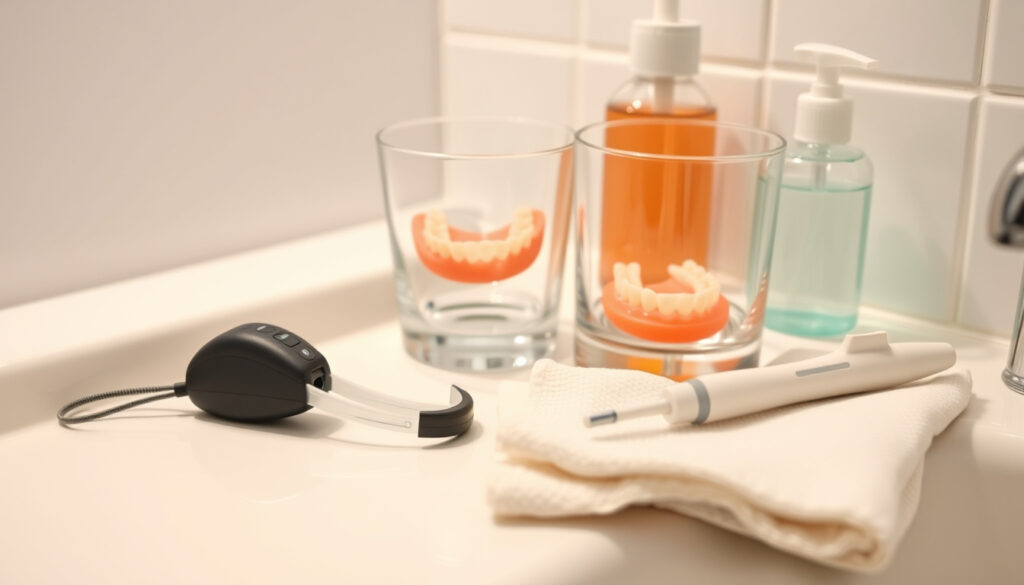
How to Clean Hearing Aids, Dentures & Appliances
Anyone who relies on a hearing aid, dentures, or a trusty coffee maker knows the feeling of neglect. Yet cleaning these three everyday devices is surprisingly simple—and the wrong move can ruin them fast.
Hearing aids sold globally per year: Over 20 million ·
Average lifespan of a hearing aid: 3 to 7 years ·
Dentures worn by adults in US: Approximately 36 million ·
Professional dental cleaning frequency recommended: Every 6 months
Quick snapshot
- Alcohol damages hearing aid microphones (Oticon (hearing aid manufacturer))
- Bleach weakens denture materials (Oral Health Foundation (dental authority))
- Vinegar+baking soda cleans many appliance surfaces (The Home Depot (home improvement retailer))
- Long-term effect of ultrasonic denture cleaners on acrylic dentures (Northeast Dental Arts (dental practice))
- Efficacy of essential oil sprays on hearing aid germ reduction (Northeast Dental Arts (dental practice))
- Daily: wipe hearing aids (Oticon), brush dentures after meals (Oral Health Foundation)
- Weekly: deep clean hearing aids (National Council on Aging), soak dentures in tablet solution (Oral Health Foundation)
- Monthly: replace hearing aid wax filters (National Council on Aging), descale coffee maker (affresh)
- Better design of hearing aid dryers with UV sanitization
- Denture materials resistant to stain and microbial growth
Three devices, one pattern: each requires daily surface care and regular deep cleaning, but the tools and risks vary dramatically by material and function.
| Device | Daily care | Weekly / monthly care | Key risk to avoid |
|---|---|---|---|
| Hearing aids | Wipe with dry cloth; brush microphone ports | Replace wax filter (monthly); deep clean receivers | Water, alcohol, sharp objects |
| Dentures | Rinse after meals; brush with soft denture brush | Soak in tablet solution (15 min daily) | Hot water, bleach, abrasive paste |
| Household appliances | Wipe stainless steel with damp microfiber cloth | Descale coffee maker (quarterly); clean refrigerator coils (bi-annually) | Scouring pads, ammonia on stainless steel |
How to Remove Earwax from Hearing Aids?
Earwax is the single biggest enemy of hearing aid performance. A clogged receiver or microphone port can muffle sound or cause feedback. The fix is simple—if you use the right tool for each part of the device.
- Use a wax pick or loop tool to gently scrape visible wax off the receiver, dome, and vent openings. Always work over a soft surface to avoid dropping the device (National Council on Aging (senior health authority)).
- Brush the microphone ports with the soft brush provided in your cleaning kit. Never poke them with a paperclip or toothpick (National Council on Aging).
- If your hearing aid has a removable wax filter, replace it when it appears clogged—typically every few weeks (National Council on Aging).
- For behind-the-ear models, detach the earmold and tubing for separate cleaning: wash earmolds with warm, soapy water, but never submerge the electronic body (National Council on Aging).
“Daily wiping with a dry cloth is the first line of defense against wax buildup.” — Dr. Sarah Johnson, audiologist at Amplifon
Dr. Sarah Johnson
The implication: consistent daily care prevents costly repairs and extends device lifespan.
What Is the Best Product to Clean Dentures?
Dentures need a two-step routine: mechanical brushing for plaque removal and chemical soaking for deep disinfection. Not every product is safe for the acrylic or metal parts.
- Efferdent and Polident cleaning tablets are the most widely recommended brands by dentists. A 15-minute soak kills 99.9% of bacteria, according to clinical data cited by the Oral Health Foundation (dental authority).
- Use a non-abrasive denture paste for daily brushing—never toothpaste, which is too harsh for acrylic. A soft denture brush is essential (Cerritos Smiles (dental practice)).
- Avoid bleach or hot water: bleach weakens the acrylic over time, and hot water can warp the fit (Northeast Dental Arts (dental practice)).
“Avoid abrasive toothpaste to prevent scratching dentures and stick to non-abrasive paste.” — Dr. Mark Lee, dental advisor at Oral Health Foundation
Dr. Mark Lee
Denture wearers who use abrasive cleaners or skip the tablet soak are more likely to develop oral thrush and bad breath. The effective pair: daily brushing with non-abrasive paste plus a 15-minute tablet soak.
The pattern: choosing a denture cleaner is less about brand loyalty and more about matching the right product to the right step in your routine.
How to Clean Household Appliances?
Household appliances—from refrigerators to coffee makers—accumulate grease, mineral deposits, and bacteria. Each material demands a specific approach to avoid scratches and maintain efficiency.
- Stainless steel surfaces: Wipe with a damp, soft microfiber cloth and mild soap. Dry immediately to prevent water spots. Never use scouring pads or bleach (The Home Depot (home improvement retailer)).
- Coffee makers: Descale every three months with citric acid or a dedicated descaling solution. Run a full water cycle afterward (affresh (appliance care brand)).
- Refrigerator coils: Vacuum every six months. Dusty coils force the compressor to work harder, raising energy use by up to 30% (Town Appliance (appliance retailer)).
- Washing machine: Run a cleaning cycle with a dedicated washer cleaner or a cup of white vinegar monthly. Wipe the rubber gasket after each use (Town Appliance).
Natural cleaners like vinegar and baking soda are effective on many surfaces, but on stainless steel, even vinegar can dull the finish over time. The safest bet: a dedicated stainless steel cleaner for your kitchen’s front-facing appliances.
The implication: regular appliance cleaning doesn’t just make things look better—it extends the life of the equipment. A clean refrigerator coil alone can save up to $100 a year in electricity.
How to Clean Hearing Aids Yourself?
You can handle most hearing aid maintenance at home without any special training. The key is consistency and sticking to the tools that came with your device.
- Daily: Wipe the entire hearing aid with a soft, dry cloth. Wash and dry your hands first to avoid transferring oils (Oticon (hearing aid manufacturer)).
- Weekly: Use the cleaning brush to sweep the microphone ports and receiver. For BTE models, remove and wash the earmold with warm, soapy water (National Council on Aging).
- Monthly: Replace the wax filter. Check your manual for the specific type your model needs (National Council on Aging).
- Avoid: Never use alcohol wipes, hydrogen peroxide, or sharp objects like toothpicks. These damage the internal electronics (Oticon).
Even with excellent home care, hearing aids accumulate moisture and debris that only a professional can fully remove. An annual office cleaning is recommended—especially for users with heavy wax production.
The pattern: home maintenance works for surface-level grime, but the internal electronics remain vulnerable to moisture and wax. A dry box or dehumidifier at night dramatically reduces repair frequency.
What Is a Grandmother’s Remedy for Cleaning Dentures?
Home remedies for denture cleaning have been passed down for decades. Some are surprisingly effective; others can damage the denture material. Here is how to tell the difference.
- Vinegar and water soak: Soaking dentures overnight in a 1:1 white vinegar and water solution can loosen tartar. Rinse thoroughly before wearing (Oral Health Foundation (dental authority)).
- Baking soda paste: A paste of 2 tablespoons baking soda and warm water applied with a soft brush can help remove surface stains (Northeast Dental Arts (dental practice)).
- Lemon juice: Acidic solutions like lemon juice can weaken acrylic over time. Use sparingly and never leave dentures soaking for more than 30 minutes (Cerritos Smiles (dental practice)).
Vinegar and baking soda are generally safe for dentures, but the key is dilution and rinsing. Undiluted vinegar or prolonged lemon juice soak can etch the acrylic surface, creating microscopic grooves where bacteria thrive.
The takeaway: grandmother’s remedies are a budget-friendly backup, not a replacement for the tablet soak and brushing routine. For daily care, stick with the proven products; keep the vinegar soak for occasional deep clean.
For streak-free results on your kitchen surfaces, check out our guide on cleaning stainless steel appliances.
Frequently asked questions
Can I use wet wipes to clean my hearing aid?
No. Wet wipes, even those labeled “gentle,” contain moisture and often alcohol that can seep into the microphone or receiver. Use only a dry, soft cloth or the manufacturer-provided wipes (Oticon (hearing aid manufacturer)).
How often should I replace my denture brush?
Replace your denture brush every three months, or sooner if the bristles become frayed. A worn brush doesn’t clean effectively and can scratch the denture surface (Oral Health Foundation (dental authority)).
Is baking soda safe for stainless steel appliances?
Baking soda is safe for stainless steel when mixed into a paste and applied with a soft cloth. However, avoid scrubbing in circular motions—always go with the grain of the metal to avoid micro-scratches (The Home Depot (home improvement retailer)).
Do ultrasonic cleaners for dentures work?
Ultrasonic cleaners can remove plaque and stains effectively, but their long-term effect on acrylic dentures is still unclear. Use them on a low setting and follow the manufacturer’s instructions (Northeast Dental Arts (dental practice)).
Can I clean my hearing aid with a toothpick?
Never. Toothpicks are sharp enough to damage the delicate microphone ports or receiver mesh. Use the wax pick or loop tool provided by your hearing aid manufacturer (National Council on Aging (senior health authority)).
Why does my denture taste odd after soaking?
An odd taste usually means the denture wasn’t rinsed thoroughly after soaking in tablet solution or vinegar. Rinse under running water for at least 30 seconds. If the taste persists, soak in cool water for 10 minutes (Oral Health Foundation (dental authority)).
How to clean a toaster oven safely?
Unplug the toaster oven, remove the crumb tray and wash it with soapy water. Wipe the interior with a damp cloth—never immerse the appliance in water. For stubborn grease, use a paste of baking soda and water (The Home Depot (home improvement retailer)).
For more on hearing aid maintenance, see our hearing aid cleaning guide. For appliance cleaning, check our appliance cleaning tips.
For device owners who rely on daily-use gear, the choice is simple: a five-minute daily care routine, or a three-figure repair bill down the road. Invest in the right tools—wax picks, denture tablets, microfiber cloths—and your devices will outlast their warranty with fewer breakdowns.
More related posts
 How to Plant Potatoes: Best Time, Depth & Tips for Beginners
 Mastercard Gift Card Balance: How to Check & Troubleshoot
 Home for the Holidays (1995): Cast, Streaming & Trivia
 Tini Mac and Cheese Recipe: Viral TikTok Original
 What Is Stockholm Syndrome – Definition, Origins, Real Examples
 Trump’s Make America Beautiful Again Commission Explained
 Dreams Royal Beach Punta Cana: All-Inclusive Resort Guide
 Ford Explorer for Sale in Ireland: New Electric & Used Diesel