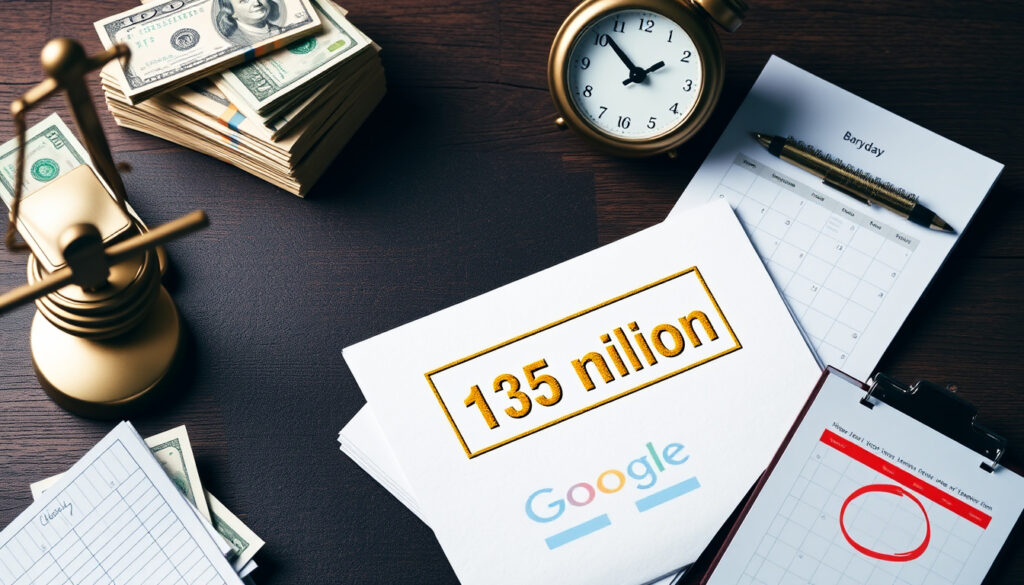
Google $135M Settlement – Eligibility, Payouts, Deadlines
A federal court granted preliminary approval in March 2026 to a $135 million class action settlement resolving allegations that Google’s Android operating system secretly transferred user data over cellular networks without consent. The case, Taylor et al. v. Google LLC, centered on claims that Android devices sent location and other personal information to Google in the background, even when idle or connected to Wi-Fi, consuming paid cellular data for targeted advertising purposes.
Plaintiffs Joseph Taylor, Mick Cleary, and Jennifer Nelson filed the lawsuit on behalf of more than 100 million U.S. Android users, excluding California residents who were covered by a separate $314.6 million settlement reached in July 2025. The U.S. District Court in California, presided over by Judge Virginia K. DeMarchi, is overseeing the case, which has prompted Google to agree to significant changes in how it discloses and collects cellular data.
What Is the Google $135m Settlement?
The settlement resolves Taylor et al. v. Google LLC (case no. 5:20-cv-07956), a class action lawsuit filed around 2020 that accused Google of collecting user data through Android devices without adequate disclosure or consent. According to the complaint, Android phones transmitted personal information—including location data—to Google’s servers using cellular data connections that users paid for, despite settings that suggested users had more control over background data usage.
The named plaintiffs represented a proposed class of over 100 million U.S. Android users who were on cellular data networks between November 12, 2017, and the date of final approval. The class excludes California residents, who were separately compensated through a $314.6 million settlement finalized in July 2025.
The class period began November 12, 2017. Users must have been U.S. Android users on cellular data networks during this period to qualify. California residents are not included in this federal class action.
Key Facts About the Settlement
Settlement Amount
$135 million non-reversionary fund
Plaintiffs
Joseph Taylor, Mick Cleary, Jennifer Nelson
Class Size
Over 100 million U.S. Android users
Status
Preliminary approval granted; final hearing pending
Key Takeaways
- Android devices allegedly sent location and other data to Google while idle, in pockets, or on nightstands
- These transfers consumed paid cellular data without clear disclosure in Google’s terms of service
- The “allow background data usage” toggle was alleged to be misleading, providing less user control than it implied
- Payouts will be automatic pro-rated cash with no claim form required, capped at $100 per class member
- Google must implement consent changes and revise disclosures as part of injunctive relief
- The settlement echoes similar privacy enforcement actions involving Google across multiple states
Settlement Snapshot
| Detail | Information |
|---|---|
| Case Number | 5:20-cv-07956 |
| Court | U.S. District Court, Northern District of California |
| Presiding Judge | Virginia K. DeMarchi |
| Plaintiffs’ Counsel | Joseph Taylor, Mick Cleary, Jennifer Nelson (named plaintiffs) |
| Defendant | Google LLC |
| Class Period Start | November 12, 2017 |
| Settlement Administrator | Angeion |
Why Did Google Agree to Pay $135 Million?
The settlement stems from allegations that Android devices engaged in undisclosed data transfers that violated user privacy and consumed cellular data users paid for. According to court filings, Android phones allegedly sent location coordinates and other personal information to Google servers in the background, even when devices were not in active use.
What Were the Specific Allegations?
Plaintiffs alleged that Android devices transmitted sensitive data—including location information—while idle, stored in pockets, or placed on nightstands. These transfers occurred without meaningful disclosure, according to the complaint, and used cellular data connections that class members paid for through their service plans.
The lawsuit claimed that Google’s practices were deceptive because settings like “allow background data usage” suggested users had greater control over such transfers than they actually did. The data collected allegedly supported Google’s targeted advertising business, generating revenue while imposing costs on users through consumed cellular data.
The case centered on undisclosed background data transfers that allegedly occurred without consent, consuming paid cellular data to fund Google’s advertising operations.
How Has Google Responded?
Google has denied any wrongdoing in connection with the allegations. According to court filings and company statements, Google agreed to the settlement to resolve the dispute without admitting liability. A company spokesman noted that similar past privacy suits, such as a geolocation case involving the Arizona Attorney General, involved outdated policies that the company had since modified.
Timeline of the Google $135m Settlement
The case moved through federal courts over several years before reaching preliminary approval. Below is a chronological overview of key events in the litigation.
- November 12, 2017: Class period begins for eligible U.S. Android users who were on cellular data networks during this time.
- Approximately 2020: Plaintiffs Joseph Taylor, Mick Cleary, and Jennifer Nelson file the class action lawsuit in the U.S. District Court for the Northern District of California (case no. 5:20-cv-07956).
- January 27–28, 2026: Motion for preliminary approval submitted to the court; reports vary on the exact filing date.
- March 5 or 9, 2026: Court grants preliminary approval to the settlement agreement.
- May 29, 2026: Deadline for class members to submit claims, file exclusions, or lodge objections.
- Date not yet set: Final approval hearing scheduled; payments to eligible class members will follow after final approval and resolution of any appeals.
Class members have until May 29, 2026, to submit claims, request exclusion, or file objections. A settlement website administered by Angeion is expected to launch to facilitate the claims process.
What Changes Does the Settlement Require from Google?
Beyond the monetary compensation, the settlement includes injunctive relief requiring Google to implement significant changes to how it discloses and handles cellular data on Android devices. These modifications aim to give users greater transparency and control over background data usage.
Required Modifications
- Updated Google Play Terms: Google must revise its terms of service to clearly disclose when and how background cellular data is used by Android applications and services.
- Affirmative Consent Flow: The Android device setup process must include a new consent step with an explicit “accept” button, requiring users to affirmatively agree before background cellular data transfers occur.
- Toggle Removal: Google must deactivate the “allow background data usage” toggle, which plaintiffs alleged created a misleading impression that users could prevent the transfers in question.
Financial Compensation for Class Members
The $135 million settlement fund is non-reversionary, meaning all money will be distributed to class members with nothing returned to Google. Payments will be automatic pro-rated cash distributed to eligible class members based on the net fund after deducting attorneys’ fees, costs, and any plaintiff awards.
No claim form is required. Individual payments are capped at $100 per class member, with exact amounts depending on the total number of eligible claimants and the size of each person’s data usage during the class period. Those seeking updates on claims or payment timing should monitor the settlement website administered by Angeion.
Related Google Settlements and Broader Context
The Android data transfer settlement is not an isolated case. Google has faced multiple privacy-related enforcement actions in recent years, reflecting increased regulatory scrutiny of how technology companies collect and use personal data.
Other Major Google Privacy Settlements
- Arizona (2022): Google agreed to pay $85 million to settle claims that it continued tracking user location even after the Location History feature was disabled. At the time, this was the largest per-capita privacy penalty against a technology company.
- California (July 2025): A separate $314.6 million settlement resolved similar allegations involving approximately 14 million users in California.
- Google Assistant (2026): A $68 million settlement addressed claims that Google collected voice recordings from the Google Assistant platform without proper consent.
- App Monopoly Settlement (2024): A $700 million settlement involving Google Play Store practices, separately negotiated by state attorneys general.
The pattern of settlements suggests ongoing challenges in how Google communicates data collection practices to users. Unlike multi-state attorney general actions, this federal class action covers users nationwide (excluding California) and does not include per-state payment breakdowns.
The injunctive relief requiring transparency improvements could affect an estimated $300 million in annual cellular data usage, according to court documents. For those interested in how technology companies manage financial obligations related to legal matters, the IRS direct deposit payments framework illustrates one method of distributing funds to large groups of individuals.
The settlement reflects a broader pattern of regulatory action against technology companies for privacy violations. State attorneys general and federal courts have increasingly required disclosure changes alongside monetary penalties.
What Information Remains Unclear?
While significant details about the settlement are confirmed, certain aspects remain uncertain pending further court action. The following comparison outlines what is established versus what has yet to be determined.
| What Is Known | What Is Uncertain |
|---|---|
| Settlement amount: $135 million non-reversionary | Exact per-member payment amounts |
| Preliminary approval granted March 2026 | Final approval hearing date |
| Class period: November 12, 2017, through final approval | Whether appeals will affect payment timing |
| Over 100 million eligible U.S. Android users (excluding California) | Actual number of valid claims submitted |
| Automatic payments capped at $100 per member | Whether the final payment exceeds or reaches the $100 cap |
| Google must revise disclosures and consent flows | Exact implementation timeline for injunctive changes |
Court documents and public records provide the confirmed information above. No finalized court documents beyond preliminary approval were available at time of publication, and outcomes remain pending final court approval.
Summary
The $135 million settlement in Taylor et al. v. Google LLC addresses allegations that Android devices secretly transferred user data—including location information—over cellular networks without adequate disclosure or consent. The case, which covers over 100 million U.S. Android users, was granted preliminary approval in early 2026, with class members having until May 29, 2026, to file claims, exclusions, or objections.
Google agreed to the settlement without admitting wrongdoing, implementing both financial compensation and injunctive relief. Eligible class members will receive automatic pro-rated payments capped at $100, with no claim form required. The company must also revise its Google Play terms, add affirmative consent steps during device setup, and remove a toggle that allegedly misled users about their control over background data usage.
The settlement fits within a broader pattern of privacy enforcement against Google, following similar actions in Arizona, California, and other jurisdictions. For broader financial context related to large-scale compensation mechanisms, the S&P 500 Index provides insight into how such legal costs may affect technology sector valuations.
Frequently Asked Questions
Who is eligible for the Google $135 million settlement?
U.S. Android users who were on cellular data networks between November 12, 2017, and the date of final approval may be eligible. California residents are excluded, as they were covered by a separate $314.6 million settlement.
How much will each class member receive?
Payments are capped at $100 per eligible member. Exact amounts will depend on the total number of valid claims and the net settlement fund after fees and costs are deducted. No claim form is required.
Do I need to file a claim to receive payment?
No claim form is required. Payments will be distributed automatically to eligible class members after final court approval and resolution of any appeals.
What changes must Google make under the settlement?
Google must revise Google Play terms to disclose background cellular data use, add an affirmative consent step with an “accept” button during Android setup, and deactivate a toggle that allegedly misled users about their data control options.
When will payments be distributed?
Payments will be made after the final approval hearing and after any appeals are resolved. The final approval hearing date has not yet been set.
What were the main allegations in the lawsuit?
Plaintiffs alleged that Android devices sent location and other personal data to Google in the background—even when devices were idle or on Wi-Fi—using cellular data that users paid for, without clear disclosure or consent.
How does this settlement relate to other Google privacy cases?
This settlement follows similar actions including an $85 million Arizona settlement, a $314.6 million California settlement, and a $68 million Google Assistant settlement. Together, they reflect ongoing regulatory attention to Google’s data collection practices.
What is the deadline to object to or opt out of the settlement?
Class members have until May 29, 2026, to submit claims, request exclusion, or file objections. Details will be available through the settlement website administered by Angeion.
More related posts
 Xfinity Store Near Me: Appointments, Returns & Hours
 How to Get Rid of a Yeast Infection in 24 Hours: Relief Guide
 Atlético Madrid vs Barcelona: Champions League Quarterfinal 2026
 How Old Is William Shatner? Age, Birth Date, and Life Milestones
 It Is Well with My Soul: Lyrics, Meaning, and Tragic Story
 Moss Agate Engagement Ring: Pros, Cons, and What to Know
 Herpes Photos in Different Stages: Visual Guide & Timing
 Mexico vs Costa Rica: Gold Cup 2025 & World Cup 2026