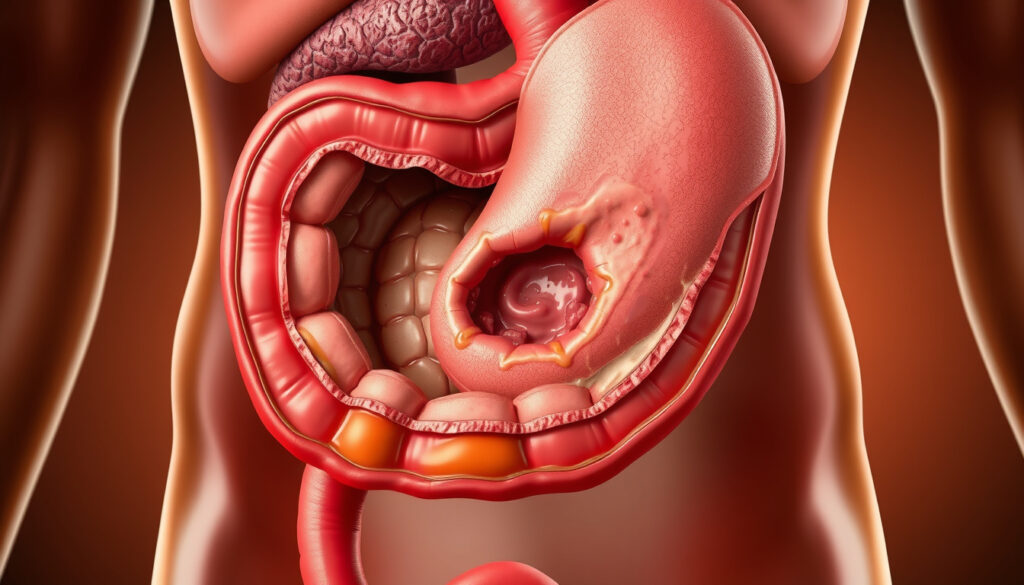
What Is an Ulcer? Causes, Symptoms, and Treatment
For decades, doctors blamed stress and spicy food for stomach ulcers. Then in 1982, a young Australian scientist made a discovery that turned that theory upside down, revealing that most peptic ulcers are caused by Helicobacter pylori or long-term NSAID use (MedlinePlus, U.S. National Library of Medicine).
H. pylori cause: about 42% of peptic ulcers · NSAID cause: about 36% · Abdominal pain: about 81% of patients (JAMA Network)
Quick snapshot
- H. pylori infection causes the majority of peptic ulcers (MedlinePlus).
- Long-term NSAID use increases ulcer risk by inhibiting protective prostaglandins (MedlinePlus).
- Antibiotic therapy cures most H. pylori-related ulcers (PMC clinical guideline).
- The exact mechanism by which H. pylori avoids immune clearance in some individuals.
- Why some ulcers become refractory to standard treatment.
- The role of diet in ulcer recurrence beyond acid reduction.
- 1982 – H. pylori discovered in gastric biopsies by Marshall and Warren.
- Antibiotic regimens continue to evolve; surgery is now rarely needed (PMC clinical guideline).
Here is a quick reference for peptic ulcer characteristics.
| Attribute | Details |
|---|---|
| Location | Stomach (gastric) or duodenum (duodenal) |
| Main cause | H. pylori infection (70–90% of cases according to some estimates, though recent data shows about 42%) |
| Symptoms | Burning pain, bloating, nausea |
| Diagnosis | Upper endoscopy, H. pylori test |
| Treatment | Antibiotics + proton pump inhibitors |
| Healing time | 4–8 weeks |
What is the definition of an ulcer?
Peptic ulcers are open sores that develop on the lining of the stomach or the first part of the small intestine (duodenum) (MedlinePlus, U.S. National Library of Medicine). These sores form when stomach acid erodes the protective mucous layer. The two main types are gastric ulcers (stomach) and duodenal ulcers (duodenum).
What is a stomach ulcer?
A stomach ulcer, also called a gastric ulcer, occurs when the lining of the stomach itself is damaged. Pain often appears shortly after meals and may worsen when the stomach is full (Medscape, clinical reference).
What is a duodenal ulcer?
Duodenal ulcers form in the first section of the small intestine. Unlike gastric ulcers, pain from a duodenal ulcer may improve right after eating but then returns 2 to 3 hours later (JAMA Network). Duodenal ulcers are more common than gastric ulcers.
How do ulcers form?
- An imbalance between defensive factors (mucus, bicarbonate) and aggressive factors (acid, pepsin) leads to tissue breakdown (StatPearls / NCBI Bookshelf).
- Acute ulcers have regular borders; chronic ulcers have elevated, inflamed edges (StatPearls).
The implication: understanding these distinctions helps patients and clinicians identify the right treatment approach.
What is the main cause of an ulcer?
The most common causes of peptic ulcers are H. pylori infection and long-term use of NSAIDs such as aspirin and ibuprofen (MedlinePlus). Together they account for roughly 78% of all peptic ulcers (JAMA Network).
What causes a stomach ulcer?
H. pylori bacteria weaken the stomach’s protective mucus layer, allowing acid to damage the tissue. NSAIDs block enzymes that produce protective prostaglandins (StatPearls).
How does H. pylori cause ulcers?
- The bacterium produces urease, which creates ammonia and neutralizes acid locally, allowing it to survive and inflame the lining (StatPearls).
- Not everyone infected develops ulcers – genetics and immune responses play a role.
Can NSAIDs cause ulcers?
Yes. Chronic NSAID use is linked to about 36% of peptic ulcers (JAMA Network). Even low-dose aspirin can increase risk. If NSAIDs cannot be stopped, a proton pump inhibitor is recommended to protect the stomach (PMC clinical guideline).
Pain relief from NSAIDs comes at a cost for millions. Anyone who takes daily NSAIDs for arthritis or other chronic pain should talk to their doctor about stomach protection.
The catch: ignoring this trade-off can lead to silent damage that may only appear when it’s an emergency.
What are the first signs of an ulcer?
The most common symptom is a burning pain between the breastbone and belly button (American College of Gastroenterology). About 81% of people with peptic ulcers experience this pain (JAMA Network).
What does ulcer pain feel like?
- “A gnawing or burning sensation that comes and goes” – often described as indigestion.
- Duodenal ulcer pain typically strikes when the stomach is empty and improves with food (JAMA Network).
When do ulcer symptoms appear?
Pain may wake you at night. Gastric ulcers hurt soon after meals; duodenal ulcers hurt 2–3 hours later (Medscape). Some people have no symptoms at all (American College of Gastroenterology).
Early stage ulcer symptoms in women
Research shows no sex-specific differences in early symptoms, but women may report more nausea and bloating. A 2023 review found that about 46% of ulcer patients experience heartburn or acid regurgitation (JAMA Network). Recognizing symptoms of other common conditions can also be helpful — see our guide on Signs of Yeast Infection.
“The most common symptom is a burning pain in your stomach between your breastbone and belly button.” – Cleveland Clinic (Mayo Clinic, patient resource)
Mild discomfort can mask a serious problem. About 29% of peptic ulcers cause bleeding, which may present as black, sticky stools or vomiting that looks like coffee grounds (American College of Gastroenterology).
The pattern: early signs often mimic ordinary heartburn, but the consequences of ignoring them can be severe.
How serious is an ulcer?
Most peptic ulcers are treatable and not life-threatening. However, complications – bleeding, perforation, or blockage – affect an estimated 10–20% of cases (Mayo Clinic).
Are stomach ulcers dangerous?
- Untreated bleeding ulcers can lead to anemia or shock.
- A perforated ulcer creates a hole in the stomach wall, requiring emergency surgery (StatPearls).
What happens if an ulcer is left untreated?
Without treatment, ulcers can cause persistent pain, bleeding, and scarring that narrows the passage from the stomach to the intestine (gastric outlet obstruction) (American College of Gastroenterology).
Can an ulcer cause internal bleeding?
Yes. Bleeding is the most common complication, occurring in about 29% of ulcer patients (JAMA Network). Warning signs include black stools or vomiting blood (American College of Gastroenterology).
Many people dismiss early signs as heartburn. But a bleeding ulcer can turn into a medical emergency within hours. If you see black stool or vomit that looks like coffee grounds, go to the ER immediately.
What this means: an ulcer that seems mild can suddenly become life-threatening, so prompt evaluation is critical.
How do you treat an ulcer?
Treatment depends on the cause. If H. pylori is present, antibiotics are prescribed alongside acid-blocking drugs. If NSAIDs are the culprit, stopping them – or adding a proton pump inhibitor – is the first step (PMC clinical guideline).
What helps an ulcer go away?
- Proton pump inhibitors (omeprazole, esomeprazole) reduce acid production and allow healing.
- For H. pylori: a 2-week course of two antibiotics plus a PPI (PMC clinical guideline).
- Stop smoking and limit alcohol – both slow healing (JAMA Network).
How long do ulcers take to heal?
Most uncomplicated ulcers heal within 4–8 weeks of appropriate therapy (Merck Manual, clinical reference). H. pylori eradication reduces recurrence rates dramatically.
How can you cure a stomach ulcer?
Cure is possible when the underlying cause is addressed. For H. pylori-related ulcers, successful eradication heals over 90% of cases. For NSAID-induced ulcers, removing the offending drug leads to resolution in most patients (PMC clinical guideline).
For a related blood test explanation, see our article on What Is MCH in Blood Test?.
The takeaway: early diagnosis and cause-specific therapy nearly always resolve an ulcer without long-term consequences.
“This completely changed how we think about ulcers.” – Dr. John Inadomi, gastroenterologist, University of Washington (JAMA Network)
“Stomach ulcers are open sores that develop on the lining of the stomach.” – NHS (NHS, UK health authority)
ucihealth.org, aafp.org, youtube.com, emedicine.medscape.com, en.wikipedia.org
Frequently asked questions
Can stress cause a stomach ulcer?
Stress does not directly cause ulcers, but it can worsen symptoms and may contribute through increased acid production. The real causes are H. pylori and NSAIDs (American College of Gastroenterology).
Is it safe to take painkillers if I have an ulcer?
NSAIDs should be avoided. Acetaminophen (paracetamol) is generally safe. Always check with your doctor (Mayo Clinic).
What foods should I avoid with an ulcer?
Spicy foods, caffeine, alcohol, and acidic foods can irritate the lining. A bland diet helps during healing, but no diet replaces medical treatment (NHS).
Can an ulcer heal on its own without treatment?
Some minor ulcers may heal temporarily, but without addressing the cause (H. pylori or NSAIDs), they often return or worsen. Treatment is strongly recommended (MedlinePlus).
How is a stomach ulcer diagnosed?
An upper endoscopy (camera down the throat) is the gold standard. H. pylori can be detected via breath, stool, or biopsy tests (Mayo Clinic).
Do stomach ulcers always cause pain?
No. Many people have silent ulcers – especially older adults and those on NSAIDs. They may only discover the ulcer when it bleeds (American College of Gastroenterology).
Can children get peptic ulcers?
Yes, though less common. Causes include H. pylori infection, NSAID use, and rare conditions like Zollinger-Ellison syndrome (StatPearls).
For anyone with persistent abdominal pain, the message is clear: seek medical evaluation, because an untreated ulcer can lead to complications – bleeding, perforation, or obstruction – that are far harder to fix. If you take daily pain relievers, talk to your doctor about protecting your stomach. A simple breath test for H. pylori could save you months of misery, and a short course of antibiotics may be all that stands between you and a healed lining.
More related posts
 Signs of Yeast Infection: Identification and Next Steps
 Hands-Free Breast Pump Guide: Worth It & Best Picks
 Cleveland Cavaliers vs Boston Celtics: Player Stats 2025-26
 Daylight Saving Time 2026 Early: Why Clocks Change Sooner
 French Toast Casserole Recipe: How to Fix Common Mistakes
 Woman in the Yard: Cast, Trailer, Release Date
 What Is Stockholm Syndrome – Definition, Origins, Real Examples
 Over the Garden Wall Streaming: Where to Watch in 2025