Man on the Moon: Film, R.E.M. Song & Moon Landing Guide
Few entertainers blurred the line between performance and reality as deliberately as Andy Kaufman—and few artists captured that ambiguity as precisely as R.E.M. did in their 1992 song “Man on the Moon.” The track turned Kaufman’s rumored faked death into a meditation on fame and authenticity.
Film Release Year: 1999 ·
Lead Actor: Jim Carrey ·
Moon Walker: Neil Armstrong ·
Song Artist: R.E.M. ·
R.E.M. Song Album: Automatic for the People
Quick snapshot
- 1999 film directed by Miloš Forman (Wikipedia)
- Jim Carrey portrayed Andy Kaufman in biographical tragicomedy (Wikipedia)
- R.E.M. released “Man on the Moon” in 1992 as tribute to Kaufman (Jukebox Time Machine)
- Extent of R.E.M.’s creative involvement in 1999 film beyond soundtrack
- Specific health impacts on Jim Carrey from method acting immersion
- 1979: Kaufman’s Carnegie Hall milk-and-cookies performance
- 1984: Kaufman’s death; faked-death rumors begin
- 1992: R.E.M. releases “Man on the Moon” single
- 1999: Forman directs biopic starring Carrey
- 2017: Netflix documentary “Jim & Andy” premieres November
- Streaming availability keeps film accessible to new audiences
- Kid Cudi’s Man on the Moon series extends the cultural legacy
The table below consolidates key facts about the Man on the Moon cultural phenomenon spanning film, music, and space exploration.
| Field | Value |
|---|---|
| Film Stars | Jim Carrey |
| Subject | Andy Kaufman |
| Moon Walker | Neil Armstrong |
| Mission | Apollo 11 |
| Song Artist | R.E.M. |
| Song Position | Second single from Automatic for the People |
| Lyricist | Michael Stipe |
| Film Director | Miloš Forman |
| Supporting Cast | Danny DeVito, Courtney Love, Paul Giamatti |
| Film Release | 1999 |
Why did they call Andy Kaufman Man on the Moon?
The nickname “Man on the Moon” emerged from R.E.M.’s 1992 song, written by Michael Stipe as a direct tribute to Kaufman, who died in 1984. The connection runs deeper than a simple homage: Kaufman’s death spawned persistent rumors that he had faked it and was still alive somewhere—a hoax narrative that Stipe mirrored against moon landing conspiracy theories in the song’s chorus.
The film followed in 1999, directed by Miloš Forman and starring Jim Carrey as Kaufman. Forman and screenwriter pair Scott Alexander and Larry Karaszewski had already explored controversial real-life figures in “The People vs. Larry Flynt” and “Ed Wood”; “Man on the Moon” became the third installment in their “anti-great man” trilogy, examining how public perception shapes legacy.
Connection to R.E.M. song
R.E.M. contributed heavily to the film’s musical identity. Their existing song provided the title, and they created new material including “The Great Beyond,” which became the band’s biggest UK hit. The song’s lyrics reference specific Kaufman bits: his Elvis impersonation, intergender wrestling challenges, and his film “My Breakfast with Blassie” with Andy Kaufman.
Kaufman specialized in performances that deliberately erased the boundary between reality and fiction—yet R.E.M.’s tribute song treats his faked death as the ultimate proof that he succeeded.
Kaufman’s performances
Kaufman’s act consistently challenged audience expectations. His milk-and-cookies Carnegie Hall show in 1979, where he invited children and served snacks during a comedy set, exemplified his willingness to subvert norms. The film depicts this moment as occurring after his cancer diagnosis, though it actually happened in 1979, before his illness.
A master at manipulating audiences, Kaufman could generate belly laughs, stony silence, tears, or brawls.
— Rotten Tomatoes film synopsis
Who was actually the first man on the Moon?
Neil Armstrong became the first human to walk on the Moon on July 20, 1969, during the Apollo 11 mission. His words—”That’s one small step for man, one giant leap for mankind”—entered global vocabulary instantly. Buzz Aldrin followed Armstrong onto the lunar surface approximately 19 minutes later, becoming the second person to walk on the Moon.
The connection between Armstrong and Kaufman operates on metaphorical rather than biographical ground. Kaufman’s comedy routines sometimes referenced space themes, and he performed at Purdue University, which counts Armstrong among its notable alumni. The 2017 Netflix documentary “Jim & Andy: The Great Beyond” shows Carrey channeling Kaufman’s boundary-pushing energy during filming, an approach not unlike how Armstrong pushed boundaries in space exploration.
The R.E.M. song links Armstrong’s achievement to Kaufman’s legacy through the conspiracy theory angle—both became subjects of “did it really happen?” speculation, though for entirely different reasons.
What happened to Jim Carrey during Man on the Moon?
Jim Carrey committed to portraying Andy Kaufman through an intensive method acting approach that blurred the line between performer and subject. According to the 2017 Netflix documentary “Jim & Andy: The Great Beyond,” directed by Chris Smith, Carrey remained in character as Kaufman—including his obnoxious lounge singer alter-ego Tony Clifton—for the entire production schedule.
This immersion affected production dynamics significantly. Cast members and crew reported that Carrey’s commitment created challenging but productive conditions. Danny DeVito, Courtney Love, and Paul Giamatti worked alongside Carrey during scenes depicting Kaufman’s rise through comedy clubs in the 1970s and his increasingly controversial performances in the 1980s.
Film historian commentary suggests Carrey’s approach echoed Kaufman’s own methods, though direct comparisons between actor and subject require caution given Kaufman’s fundamentally different artistic philosophy.
Method acting immersion
The documentary shows how deeply Carrey inhabited Kaufman’s persona. Unlike standard preparation, Carrey reportedly lived as Kaufman between takes, staying in character as Tony Clifton during interviews and public appearances connected to the film’s promotion. This approach generated both acclaim for its authenticity and concern about its psychological toll.
Production anecdotes
Real Kaufman associates appeared both on and off camera during production, according to production notes. The film acknowledges its own artistic license in depicting events, though the core trajectory from comedy newcomer to national figure tracks Kaufman’s actual career arc.
Is The Man on the Moon a good movie?
Critical reception for “Man on the Moon” generally praised Jim Carrey’s performance while acknowledging the film’s uneven narrative structure. The Rotten Tomatoes consensus describes Kaufman’s story as difficult to adapt cinematically, noting that Carrey “is pretty amazing as Kaufman” while the film itself struggles to capture its subject’s chaotic genius.
Audience scores on IMDb reflect appreciation for Carrey’s commitment and the film’s willingness to embrace Kaufman’s unconventional approach to comedy. The biographical tragicomedy genre allowed Forman to balance Kaufman’s genuinely funny moments with the darker aspects of his career, including his health struggles and controversial stunts.
Critical reception
Film critics particularly noted how the screenplay by Alexander and Karaszewski handled Kaufman’s reputation for manipulating audiences. The writers acknowledged that any biopic of Kaufman would itself become part of the Kaufman legend—a figure who deliberately blurred performance and reality.
Jim Carrey is considered one of the most innovative, eccentric performers of his generation, sharing certain qualities with Kaufman that made him uniquely suited to portray the comedian.
— Jukebox Time Machine music commentary
Audience scores
IMDb ratings place the film solidly in positive territory, with particular strength in the performance category. Viewer reviews frequently highlight specific scenes—Carrey’s Carnegie Hall sequence and his wrestling challenges—as standout moments where the film’s ambition matches its execution.
Carrey’s performance elevates material that might have become merely curious, turning Kaufman’s story into something approaching the strange power of Kaufman’s original act.
How accurate is the movie Man on the Moon?
The 1999 film takes significant liberties with Andy Kaufman’s actual life events. The most notable discrepancy involves the Carnegie Hall milk-and-cookies performance: the film depicts it as occurring after Kaufman’s cancer diagnosis, but it actually happened in 1979, before his illness.
The film also condenses Kaufman’s timeline and combines certain events for dramatic purposes. Kaufman’s famous battles with wrestling personalities and his “FN” women’s wrestling league receive dramatized treatment that captures their spirit while adjusting details for narrative flow.
Factual depictions
The core arc remains faithful to Kaufman’s career: his emergence from comedy clubs, his breakthrough on “Taxi,” his deliberate provocation of audiences, and his untimely death in 1984. The film includes real Kaufman associates and incorporates actual footage where available.
The film’s own credits acknowledge artistic license, though specific changes from Kaufman’s actual biography are not individually flagged. Viewers seeking complete accuracy should consult dedicated Kaufman biographies.
Creative liberties
Alexander and Karaszewski’s screenplay treats Kaufman mythology as inseparable from Kaufman facts. This approach mirrors Kaufman’s own philosophy—he genuinely seemed to believe that perceived reality mattered more than documented truth. The film itself becomes part of this tradition, contributing to the legend while claiming to explain it.
The R.E.M. song’s placement within the film as both title inspiration and soundtrack element creates a chicken-and-egg dynamic that did not exist in Kaufman’s actual timeline, though it reflects how posthumous reassessment had reshaped his legacy by 1999.
Confirmed vs. Unclear
Confirmed facts
- Neil Armstrong’s first Moon walk on July 20, 1969, per NASA records
- Film released in 1999 with Jim Carrey starring as Kaufman
- R.E.M. released “Man on the Moon” in 1992 as tribute
- Miloš Forman directed the biopic
- Carnegie Hall performance occurred in 1979
- Andy Kaufman died in 1984
What remains unclear
- Exact scope of R.E.M.’s creative involvement beyond soundtrack contribution
- Specific psychological impacts on Jim Carrey from method immersion
- Whether Kaufman’s Purdue performances had direct Armstrong connections
- Full extent of Kaufman’s UK familiarity versus US recognition
What people say
A master at manipulating audiences, Kaufman could generate belly laughs, stony silence, tears, or brawls.
— Rotten Tomatoes (Film synopsis)
Jim Carrey is pretty amazing as Kaufman, capturing both the comedic genius and the strange melancholy that defined Kaufman’s career.
— Jukebox Time Machine (Music commentary)
The “Man on the Moon” phenomenon reveals how cultural artifacts accumulate meaning through accumulation. R.E.M.’s 1992 tribute song transformed Kaufman’s rumored faked death into a meditation on authenticity; Forman’s 1999 film turned that tribute into a biopic vehicle for Carrey’s most committed dramatic performance; and the 2017 documentary examined how far extreme acting commitment can blur performer and character. For audiences encountering these works now, the layered references create something Kaufman himself might have appreciated: a reality where nothing is quite what it seems, and that’s precisely the point.
Related reading: first man on the moon trivia
tvtropes.org, youtube.com, movies.fandom.com, comedyhistory101.com, rottentomatoes.com
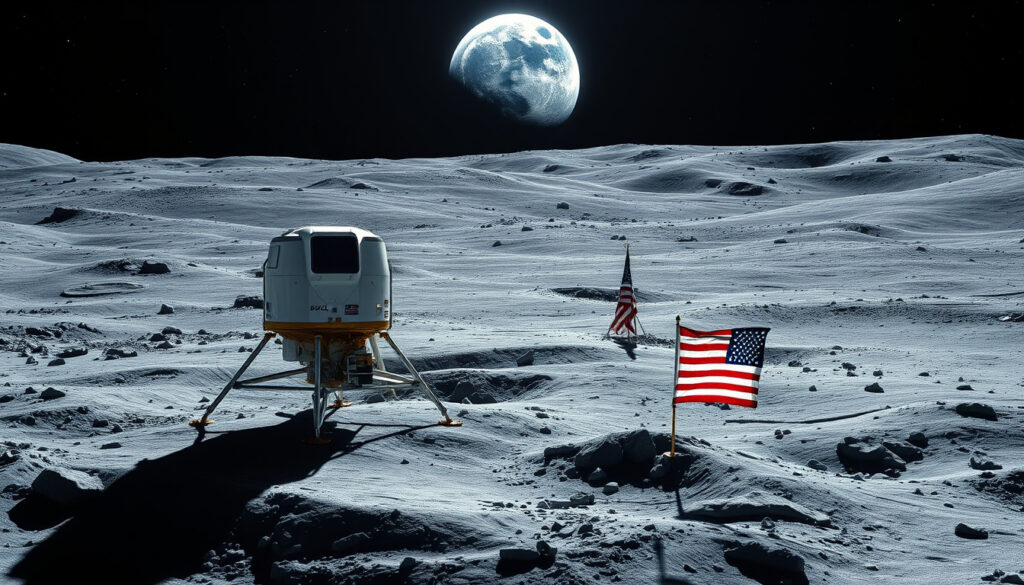
Recent private efforts like the Firefly Blue Ghost landing in Mare Crisium echo the pioneering Apollo 11 mission’s lunar legacy.
Frequently asked questions
Who was first, Buzz or Neil?
Neil Armstrong was first, stepping onto the lunar surface on July 20, 1969. Buzz Aldrin followed approximately 19 minutes later.
Why can’t humans go to the Moon anymore?
NASA ended Apollo program crewed lunar missions in 1972. Political will, budget constraints, and shifting priorities redirected resources toward space stations and robotic exploration. Current Artemis program aims to return astronauts to the lunar surface.
What is Jim Carrey diagnosed with?
Publicly available information does not confirm specific diagnoses beyond acknowledged depression. Claims about specific conditions lack verification from Carrey himself or medical documentation.
What are Man on the Moon lyrics?
R.E.M.’s “Man on the Moon” lyrics by Michael Stipe reference Andy Kaufman’s career: his Elvis impressions, wrestling performances, and film “My Breakfast with Blassie.” The chorus uses moon landing conspiracy parallels for Kaufman’s rumored faked death.
Where to stream Man on the Moon?
Streaming availability varies by region and platform. Check current listings on major streaming services for rental or subscription access options.
What is Man on the Moon by Kid Cudi?
Kid Cudi released “Man on the Moon” as the title of his debut studio album in 2009. The project, divided into two acts exploring themes of depression and artistic ambition, draws its title from the Andy Kaufman legacy while creating an entirely separate musical work.
More related posts
 AT&T Wireless Customer Service: Get Help Fast
 When Is Mexican Independence Day – Date, History & Celebrations
 28 Weeks Later Cast – Actors, Characters and Key Insights
 Candyman (2021) Review: Is It a Good Horror Movie
 How to Plant Potatoes: Best Time, Depth & Tips for Beginners
 ICE Ends Bond Hearings: Policy Change, Impact, Legal Challenges
 Is Fancy Feast Good for Cats? Vet Insights & Daily Feeding Guide
 Toxic Shock Syndrome Symptoms: Early Signs & Tampon Risks