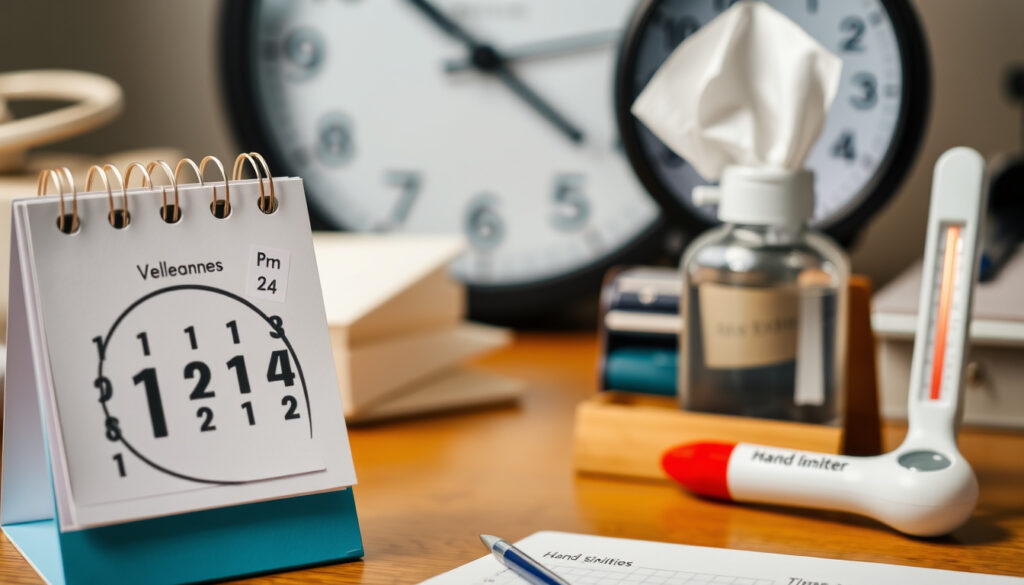
How Long I Strep Contagiou ? When to Return to School or Work
You wake up with a throat that feels like sandpaper, check the thermometer, and start doing the math: Can I still go to that meeting tomorrow? Is it safe to kiss my partner goodnight? The answer for strep throat depends almost entirely on one thing — whether you take antibiotics and how fast they kick in. Here’s what the latest guidelines say about the contagious window and when it’s truly safe to be around others.
Contagious with antibiotics: 24–48 hours after starting treatment ·
Contagious without antibiotics: up to 1 month ·
Incubation period: 2–5 days ·
Most common antibiotics: penicillin or amoxicillin ·
Peak contagiousness: just before symptoms appear and during early illness
Quick snapshot
- Antibiotics reduce contagiousness within 24–48 hours (American Medical Association (infectious-disease specialist))
- Untreated strep can be contagious for weeks (GoodRx (pharmacy & health resource))
- Incubation period is 2–5 days (UC Davis Health (academic medical center))
- Exact timing when contagiousness ends may vary by individual
- Whether a single dose of amoxicillin is enough to stop transmission is not definitively proven
- Day 0: exposure → days 2–5: incubation → day 1–3 of illness: peak contagiousness → 24–48h after antibiotics: non-contagious
- Return to school/work after 24 hours of antibiotics and no fever (Pediatric Associates of Richmond (pediatric practice))
Five key facts define the contagious window for strep throat:
| Metric | Value |
|---|---|
| Contagious on antibiotics | 24–48 hours (AMA) |
| Contagious without antibiotics | up to 1 month (GoodRx) |
| Incubation period | 2–5 days (UC Davis Health) |
| Peak symptom day | Day 2–3 of illness |
| First-line antibiotic | Penicillin or amoxicillin (AMA) |
| Return to school (with antibiotics) | After 12–24 hours and fever-free (CDC (federal public health agency) citing AAP Red Book) |
When is your strep no longer contagious?
How long after antibiotics do you stop being contagious?
- People who start antibiotics become less contagious in about 24–48 hours (AMA infectious-disease specialist).
- The CDC notes that after at least 12 hours of appropriate antibiotic therapy, transmission risk is reduced (CDC clinical guidance).
- Most pediatricians advise a full 24 hours of antibiotics before returning to school (Pediatric Associates of Richmond).
The catch: The 12-hour window comes from the American Academy of Pediatrics 2018 update, but many schools and workplaces still enforce the 24-hour rule. Always check your local policy.
How long are you contagious without antibiotics?
- Without treatment, children can be contagious for up to a month (GoodRx).
- UC Davis Health says untreated people can spread the bacteria for a couple of weeks (UC Davis Health).
- The risk of complications like rheumatic fever makes untreated strep a serious concern (CDC).
Skipping antibiotics trades a 1-2 day contagious window for a 2-4 week one — and adds risk of long-term heart damage. The decision is not just about symptoms.
Can you spread strep before symptoms appear?
- Yes — the AMA reports that strep is highly contagious during the 2-to-5-day incubation window before symptoms are obvious (AMA).
- The incubation period means you can infect others before you feel sick (UC Davis Health).
What this means: Even if you feel fine, you could have been shedding bacteria for days. This is why outbreaks often start before anyone has a sore throat.
How long do I have to quarantine if I have strep throat?
Can I sleep next to someone with strep throat?
- Close contact, including sleeping in the same bed, should be avoided until the person is non-contagious (CDC).
- With antibiotics, the contagious period ends after 24 hours; without, it may last weeks.
The pattern: The risk of transmission is highest during the first 48 hours of symptoms, so separate sleeping arrangements are a smart precaution.
When can I go back to work or school?
- Stay home until you have taken antibiotics for at least 24 hours and have no fever without medication (GoodRx).
- The AAP Red Book says children can return after 12 hours of antibiotics if well-appearing (CDC citing AAP Red Book).
- Without antibiotics, it’s best to stay home until symptoms fully resolve, which may take a week or more.
- Confirm strep diagnosis via rapid test or culture.
- Start prescribed antibiotics immediately.
- Stay home for at least 24 hours after the first dose.
- Ensure fever has resolved without medication.
- Verify symptoms are improving (sore throat, pain).
- Check your school or workplace policy (12 vs 24-hour rule).
- Return to normal activities only after meeting the required waiting period.
Parents and employers need a clear rule: The 12-hour guideline is endorsed by the CDC and AAP, but many schools still use a 24-hour policy. Check your district’s handbook to avoid confusion.
The pattern: A shorter course of antibiotics is the fastest route back to normal life, while skipping treatment extends isolation significantly.
What’s the worst day for strep throat?
What are the typical symptoms day by day?
- Day 0: exposure. Days 2–5: incubation (no symptoms but bacteria multiplying). Day 1–3 of illness: peak symptoms (AMA).
Symptoms often peak 3–5 days after exposure. Severe sore throat and fever are worst around day 2–3 of illness (UC Davis Health). With antibiotics, improvement usually begins within 24–48 hours.
When does the sore throat peak?
The worst sore throat typically hits on day 2 or 3 of active symptoms. After that, even without antibiotics, the pain usually starts to fade (though contagion persists).
What antibiotic kills strep?
How many doses of amoxicillin before strep is not contagious?
- After 2–3 doses of amoxicillin (typically 12–36 hours), contagiousness decreases significantly (CDC guidance).
- Penicillin and amoxicillin are first-line treatments (AMA).
The catch: Missing even a single dose can prolong the contagious window. Always complete the full 10-day course (UC Davis Health).
Are there home remedies that work?
- Home remedies (honey, warm salt water, throat lozenges) can soothe symptoms but do not kill the bacteria or reduce contagiousness (CDC).
- Antibiotics are required to prevent complications; home remedies only relieve pain.
Is it strep throat?
Key strep throat symptoms in adults
- Sudden sore throat, pain when swallowing, fever ≥101°F (38.3°C), swollen tonsils with white patches, and no cough (CDC).
How to differentiate from a viral sore throat
- Viral sore throats often include cough, runny nose, and hoarseness — symptoms that are rare with strep (AMA).
- A rapid strep test or throat culture confirms the diagnosis (UC Davis Health).
A patient who guesses “strep” based on symptoms alone is wrong about a third of the time. Testing is cheap, quick, and prevents unnecessary antibiotic use.
The pattern: Relying on symptoms alone is unreliable — a simple test removes the guesswork and ensures appropriate treatment.
Timeline of strep contagiousness
This timeline maps the contagious period based on treatment status and symptom progression.
| Period | What’s happening | Contagious? |
|---|---|---|
| Day 0 (exposure) | Exposure to group A Streptococcus | Not yet |
| Days 2–5 (incubation) | No symptoms yet, bacteria multiplying | Yes (AMA) |
| Day 1–3 of illness | Symptoms peak (sore throat, fever) | Highly contagious (UC Davis Health) |
| 24–48 hours after first antibiotic dose | No longer contagious if fever gone and feeling better | No (GoodRx) |
| Without antibiotics, up to 4 weeks | Can still spread the infection | Yes (GoodRx) |
What we know and what remains uncertain
Confirmed facts
- Antibiotics reduce contagiousness within 24–48 hours (AMA)
- Untreated strep can be contagious for weeks (GoodRx)
- Incubation period is 2–5 days (UC Davis Health)
What’s unclear
- Exact timing when contagiousness ends varies person to person
- Whether a single amoxicillin dose stops transmission is not definitively proven
- 12 hours of antibiotics reduces transmission (CDC) — but application varies
- The 12-hour vs 24-hour return policy creates practical confusion
What experts say
As far as not being contagious, that’s typically within 24 to 48 hours on antibiotics.
— Dr. Hardy, infectious disease specialist, American Medical Association
People who start taking antibiotics become less contagious in about 24 hours.
If strep throat is not treated with antibiotics, children can be contagious for up to a month.
For anyone with a sore throat and a fever, the choice is clear: Get tested, start antibiotics, and stay home for at least 24 hours. Without treatment, you risk spreading the infection for weeks — and inviting complications that no home remedy can fix. For parents and employers, the 12-hour return-to-school guideline is backed by the CDC and AAP, but confirming with your local policy saves headaches.
Understanding the strep throat contagious period is essential for knowing when it is safe to return to school or work after starting antibiotics.
Frequently asked questions
How long does strep throat last?
With antibiotics, symptoms usually improve within 1–2 days. Without treatment, symptoms may last 5–7 days, but contagiousness persists much longer.
Can strep throat go away without antibiotics?
Yes, the body can clear the infection eventually, but the risk of complications (rheumatic fever, kidney inflammation) is significantly higher without treatment (CDC).
What drink kills a sore throat fast?
Warm tea with honey or salt water gargles can soothe pain, but they do not kill the strep bacteria. Only antibiotics do that.
How long is strep contagious before symptoms appear?
During the 2–5 day incubation period, you can spread the bacteria without knowing it (AMA).
Is strep throat more contagious than a cold?
Strep is highly contagious through respiratory droplets, but a cold spreads more easily through casual contact. Both require similar prevention measures.
When should I see a doctor for a sore throat?
If you have a sore throat with fever ≥101°F, swollen tonsils, or white patches — and no cough or runny nose — get tested for strep (UC Davis Health).
Related reading: Signs of Yeast Infection and Toxic Shock Syndrome Symptoms.
More related posts
 Andrew Tate vs Chase DeMoor Fight: Result & Scorecard
 When Is Mexican Independence Day – Date, History & Celebrations
 NBA 2K24 Locker Codes – October 2024 Status and Guide
 Celia Weston Movies and TV Shows: Full Filmography & Biography
 Health Insurance Deductible: What It Is & How It Works
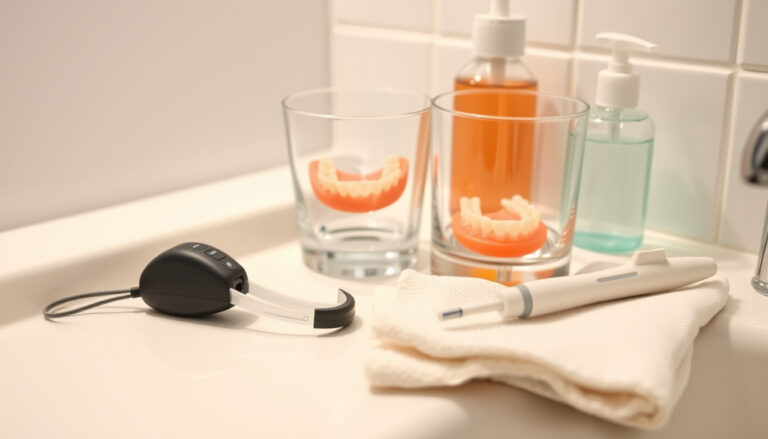 How to Clean Hearing Aids, Dentures & Appliances
 Medical Billing and Coding: Difficulty, Salary, How to Start
 Best iPhone 16 Pro Case 2026: Drop-Proof & Worth It