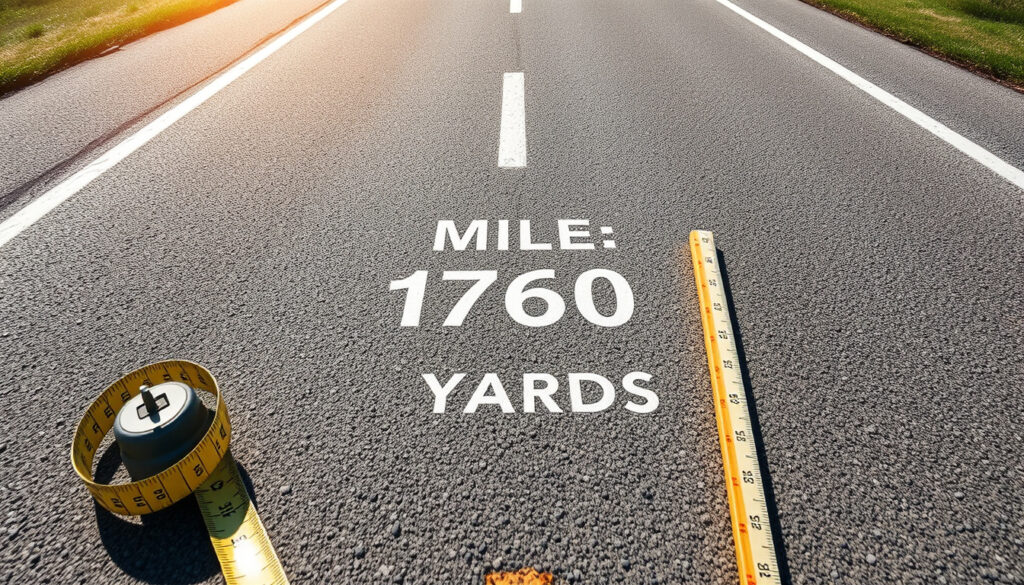
How Many Yards in a Mile? 1,760 Yards and Key Conversions
You know that moment when you’re looking at a running tracker or a road sign and a little voice inside asks, “Wait, is a mile actually that long?” It’s one of those measurements we toss around daily, yet the exact numbers behind it can feel surprisingly fuzzy. If you’ve ever wondered about the precise yardage in a mile — or found yourself converting steps to miles on a walk — this guide sorts it out with clear numbers, straight history, and practical context you can actually use.
Let’s start with the definitive answer: there are 1,760 yards in one mile. That’s also 5,280 feet, a number that has a peculiar history tied to furlongs and farming. Beyond the basic conversion, we’ll explore how that figure relates to everyday activities — like how many steps you’re really taking in a mile — and why you shouldn’t confuse a statute mile with a nautical mile.
- 1 international statute mile = 1,760 yards
- 1 international statute mile = 5,280 feet
- 1 international statute mile = 1.609344 kilometers
- Average steps per mile: ~2,000 (stride 2.1–2.5 ft)
- 10,000 steps ≈ 4.5–5.5 miles depending on stride
- 500 yards ≈ 0.284 miles (about half a kilometer)
- 1593 English statute: 8 furlongs × 220 yards = 1,760 yards
- 1959 international agreement fixed the yard at 0.9144 meters
- Nautical mile ≠ statute mile (6,076 ft vs 5,280 ft)
- Used in US road signs and UK imperial contexts
- Divides cleanly: 1,760 = 80 chains = 8 furlongs
- Metric equivalent: 1,609.344 meters exactly
How Many Miles Are 10,000 Steps Equivalent To?
If you’re aiming for the classic 10,000-step daily goal, it’s helpful to know how far that actually gets you. The standard assumption is that a person’s average stride length is about 2.1 to 2.5 feet, which translates to roughly 2,000 steps per mile. Dividing 10,000 steps by 2,000 steps per mile gives you a straightforward estimate of about 5 miles.
However, this number isn’t fixed. Your height, walking speed, and terrain all affect your stride length. A taller person with a longer stride might cover 10,000 steps in 4.5 miles, while a shorter person with a quicker, shorter stride could log 5.5 miles over the same step count.
For a more personalized estimate, you can measure your own stride length by walking a known distance — like 100 yards on a track — and counting your steps. Divide 100 yards by your step count to get your stride length in yards, then divide 1,760 by that number to find your personal steps per mile.
The Historical Roots of the 1,760-Yard Mile
The mile we use today is a British imperial and United States customary unit of length, but its journey to exactly 1,760 yards is a story of agricultural history and international diplomacy.
- 1593 Statute: One source traces the 1,760-yard mile to a 1593 English statute tying the mile to eight furlongs of 220 yards each (Viral Rang).
- Furlong origin: A furlong was the length of a furrow plowed in a day — 660 feet or 220 yards.
- Multiplication: 8 furlongs × 220 yards = 1,760 yards; 1,760 yards × 3 feet = 5,280 feet.
The 1959 agreement was the pivotal moment, defining the yard as exactly 0.9144 metres (Wikipedia — Yard). This international yard-and-pound agreement standardized the mile across the US, UK, and other English-speaking nations, ending centuries of minor regional variations.
How Many Yards in a Mile? Conversion Reference
The relationship between miles and yards is a straightforward ratio of 1,760:1, but it’s easy to make mistakes when working with fractions of a mile.
| Miles | Yards | Feet |
|---|---|---|
| 1 mile | 1,760 yards | 5,280 feet |
| 0.5 mile | 880 yards | 2,640 feet |
| 0.25 mile | 440 yards | 1,320 feet |
| 500 yards | 0.284 mile | 1,500 feet |
Why the Mile Still Matters in Daily Life
The mile and the yard are both part of the same imperial and US customary measurement systems, which means they coexist in road signs, athletics, and property records across the United States and the United Kingdom.
This duality creates a constant need for back-and-forth conversion, especially for international travellers or students learning both systems.
- Road Signs: In the US, highways and local roads display distances in miles, not kilometres.
- Athletics: Track events use yards for certain sprints (e.g., 100-yard dash), while road races use miles.
- Real Estate: Property boundaries in the US are often recorded in feet and yards, with acreage tied to the furlong system.
A Nautical Mile Is Not the Same as a Statute Mile
If your research involves ships, aviation, or oceanography, you might come across the “nautical mile” — and it’s crucial to understand that it’s a completely different unit from the mile used on land. While a statute mile is exactly 5,280 feet, a nautical mile is approximately 6,076 feet — about 796 feet longer.
In terms of yards, a nautical mile is roughly 2,025 yards. So if you’re converting speeds in knots (nautical miles per hour), be aware that you’re not dealing with standard miles per hour.
Practical Uses: Yards in Sports, Real Estate, and Daily Walking
Yards remain a practical measurement in several specific domains, and knowing the mile conversion helps you visualize distances in football, track events, or even property boundaries.
- Walking: If you’re walking a 500-yard loop around a park, that’s less than a third of a mile (0.284 miles), so you’d need about 3.5 loops to finish a mile.
- Running: A 100-yard sprint is about 0.057 miles — 17.6 of those dashes make a full mile.
- Sports fields: An American football field (120 yards with end zones) is 0.068 miles; a mile is about 14.7 football fields long.
Understanding these conversions can make fitness goals more tangible. When a fitness app tells you to burn calories by walking a certain number of miles, you can mentally map that to yards — for example, a mile is 1,760 yards, which is about 18 football fields.
How the Mile Was Standardized Internationally
The story of how the mile became exactly 1,760 yards isn’t just a British or American tale; it’s an international compromise that took centuries to settle.
Before this agreement, there were minor variations. The Scottish mile, Irish mile, and English mile all differed slightly. It wasn’t until the 1959 international yard-and-pound agreement that the yard was fixed at exactly 0.9144 meters, which locked the statute mile at precisely 1,760 yards or 1,609.344 meters.
Related reading: How Many Ounces in a Quart? US, UK, Dry & Liquid Conversions · How Many mg in a Gram? Gram to Milligram Conversion
en.wikipedia.org, hectareometro.com, heightininches.com, yardstometres.com, math.net, top10k.com, measurementstuff.com, toolward.com, sizes.com, scaleidoscope.com
Frequently Asked Questions
There are exactly 1,760 yards in one international statute mile.
An average person takes about 2,000 steps to walk one mile, assuming a stride length of 2.1 to 2.5 feet.
10,000 steps is typically equivalent to about 5 miles, though it can range from 4.5 to 5.5 miles depending on your stride.
There are 5,280 feet in one mile.
The 5,280-foot mile comes from the 1593 English statute tying the mile to eight furlongs of 220 yards each (220 × 8 = 1,760 yards, which equals 5,280 feet).
No, a nautical mile is approximately 6,076 feet, which is about 15% longer than a statute mile (5,280 feet).
Whether you’re deciphering a road sign, setting a fitness goal, or just settling a friendly argument, the mile’s relationship to the yard is now unshakeably clear: 1,760 yards, a figure rooted in English agricultural history and locked in by international agreement in 1959. Next time you see a distance in miles, you won’t just know the number — you’ll know the story behind it, from the eight furlongs to the 5,280 feet, and you can confidently convert it to yards in your head.
More related posts
 How to Clean a Mattress – Baking Soda & Vinegar Guide
 LEGO Advent Calendar 2025: Release Date, Contents & Irish Prices
 Anything But a Backpack Day: Ideas, Trend & Tips
 When Does College Football Start in 2026? Key Dates & Schedule
 Who Moved My Cheese – Summary, Lessons and Key Insights
 Over the Garden Wall Streaming: Where to Watch in 2025
 Apple Cider Vinegar Netflix: True Story & Fact Check (2025)
 Seattle Sounders vs PSG: 0-2 Match Recap & Highlights